Ishrathana
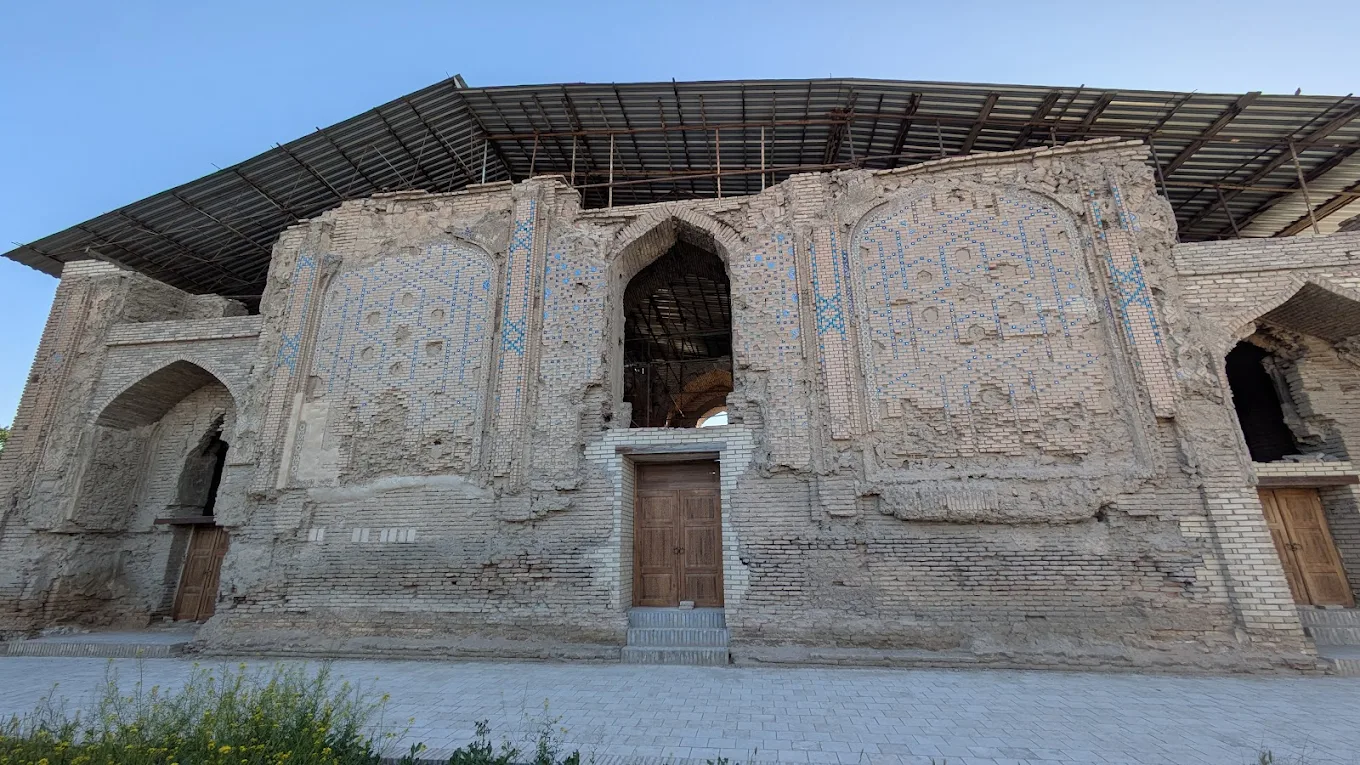
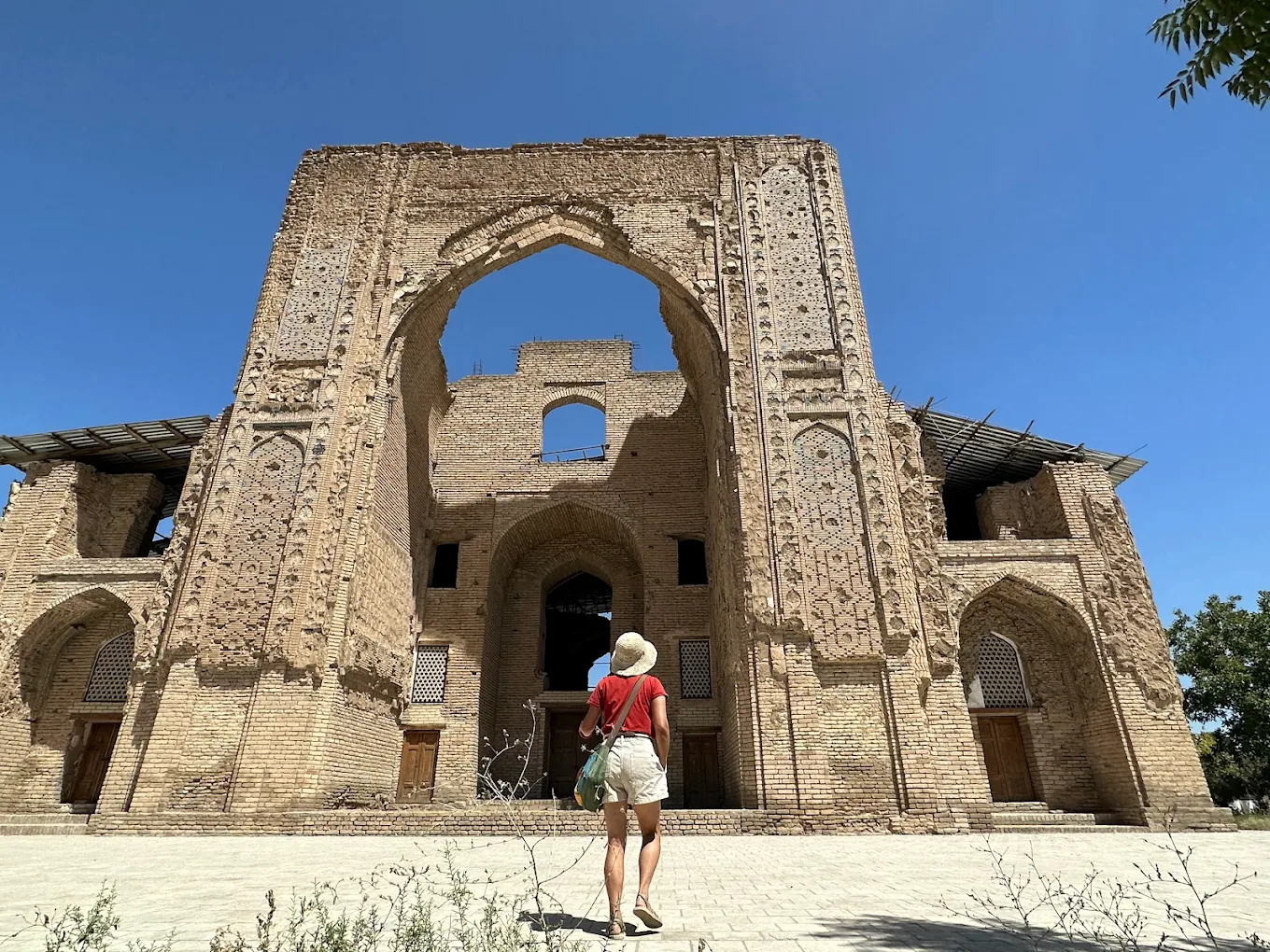
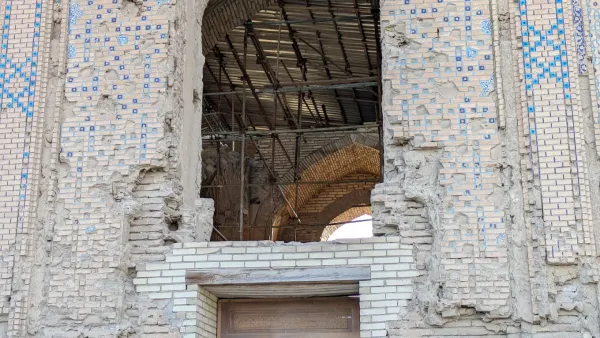
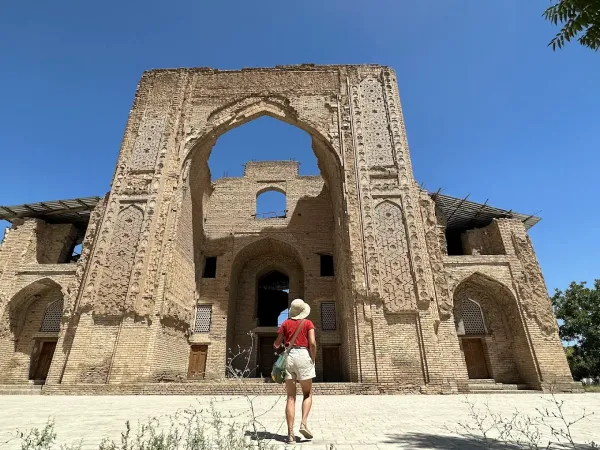
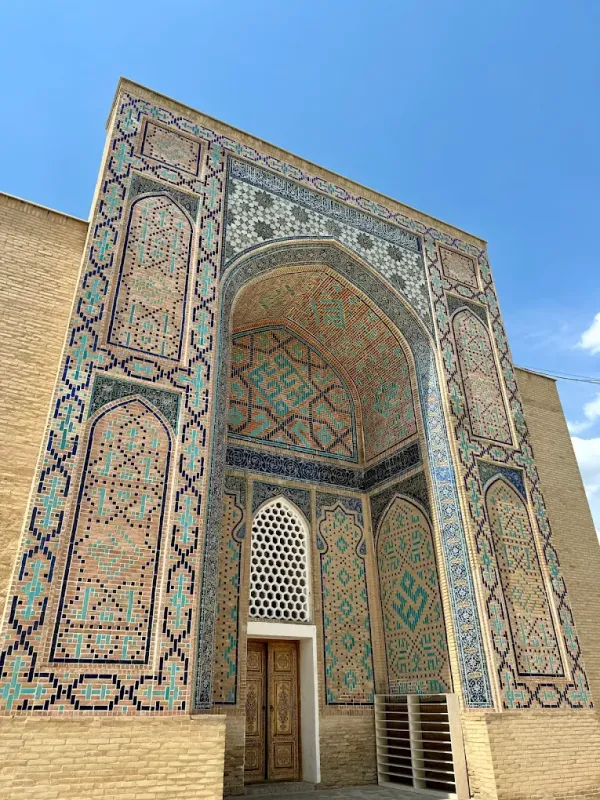
Samarkand is a truly unique city. There are so many architectural monuments here, each of which has its own history, shrouded in legends and folk tales. For example, the odious monument of Ishrathon, erected in the XV century and for some time forgotten by researchers and urban planners. In this place, where the ancient mausoleum is located, the Firuz Garden was once located – the Firuz Gods with an area of 1.5 hectares.
Ishrathona was first mentioned in the historical treatise of the 30s of the XIX century “Samaria". It states that Ishrathona was founded by the daughter of Emir Jalaliddin, Habiba Sultan.
In the middle of the 19th century, a member of the Russian embassy in Bukhara, topographer Yakovlev, drawing up a plan of Samarkand, marked the building to the southeast of the fortress gate with a large conventional sign and the inscription: "Timurleng building".
In a study of Samarkand, academician V. Bartold Ishrathona named a Nestorian monument that was turned into the Khan's pleasure palace.
A few years later, archaeologist V. Vyatkin discovered an interesting document from 1464, a letter of waqf drawn up in Samarkand, which deposited the tomb of the land plot, slaves and various possessions of Habiba Sultan Begim.
Up to 60 clerical and court officials close to the ruler of Samarkand, Sultan Abu Seyid, were involved in the preparation of the document.
The building's waqf document states that a noble woman, Timurid Abu Seyid's wife Habiba Sultan, built a domed building over the grave of her daughter, Princess Havend Sultan biki.
The mausoleum got its name "Ishrathona" in Persian, "House of Entertainment", from Samarkand folklore of the 19th century, which told about the romantic meeting of Amir Temur with a girl, after which the great emir ordered the construction of a palace here.
The first archaeological work in Ishrathon began in 1939-1940 by academicians M. E. Masson and G. A. Pugachenkova, as a result of which it was established that the mausoleum was located on a large foundation, deepened by almost 5 meters.
Ishrathana was a unique building of the XV century. Prominent figures and mothers of that time took part in the construction of the palace. At that time, there was a revolution in Samarkand architecture. Many researchers lavished praise on the art of its creators, noting not only the unrestrained luxury of the design of this building, either a mausoleum or a palace, but also the fact that fundamentally new architectural techniques and solutions were involved in the construction.
The complex includes: a mosque with a strict, modest interior, a ceremonial apartment with rich paintings in the kundal technique, where funeral processions for the last prayer were held, and a group of rooms on the 1st and 2nd floors.
Four spiral staircases lead to the second floor, where several small rooms are located, above the stairs lead to a flat roof, formerly enclosed by a barrier. Ishrathon also has an underground floor, an 8–sided crypt covered with a dome. In terms of size and richness of decoration, it had no equal in Central Asian architecture. The walls of the crypt were encircled by a bright mosaic panel, the floor was lined with marble slabs.
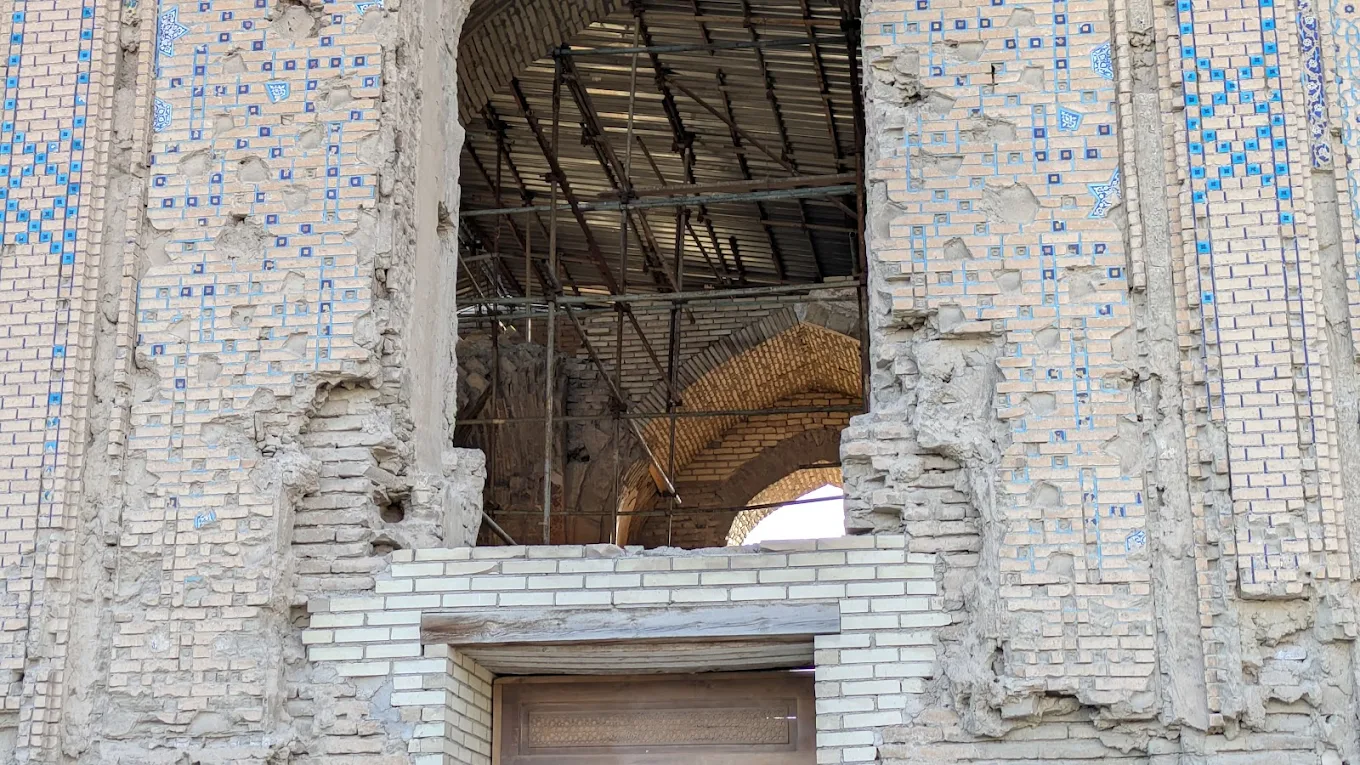
The new architectural solution also brought about new decorative techniques. For the first time, the technique of wall painting is found here – "kundal". Its essence is that the main pattern is embossed, the background is covered with gold, and the pattern is painted in different colors, or, conversely, the ornament is gilded by coloring the background. The murals of the main hall and the mion-sarai of Ishrathana have been greatly damaged by time and bad weather.
In the 16th century, the mausoleum fell into disrepair. More precisely, it was simply looted. The reason for this was the rapid construction activity in Samarkand that began in the 17th century. First, Ishrathona lost its marble panel. Since the Sher-Dor and Tillya-Kari madrassas that were being built on Registan needed large slabs. The marble tombstones were also moved to the nearby Abdi Darun cemetery, where the old slabs were replaced with the names of new faces.




Place on the map
Tours where you can visit this place:
Ishrathana
Tashkent — Bukhara — Samarkand — Shakhrisabz
- 720$
- 7d.

Ishrathana
Tashkent — Bukhara — Samarkand
- 640$
- 7d.

Ishrathana
Tashkent — Bukhara — Samarkand — Khiva — Khorezm
- 730$
- 7d.
Ishrathana
Tashkent — Bukhara — Samarkand
- 500$
- 5d.

Ishrathana
Bukhara — Samarkand — Shakhrisabz
- 480$
- 5d.

Ishrathana
Bukhara — Samarkand — Khiva
- 440$
- 5d.
Ishrathana
Tashkent — Bukhara — Samarkand — Khiva
- 590$
- 6d.
Ishrathana
Tashkent — Bukhara — Samarkand — Shakhrisabz
- 1150$
- 7d.
