Balyand Mosque
The 16th century is considered one of the important milestones in the history of Bukhara, when the Sheibanid dynasty came to power. At that time, Bukhara became the capital of the Sheibanid state. In the sixteenth century, Bukhara resumed trade with Russia, India and other countries. Metal structures, furs, processed leather, wax, honey, wooden planks, mirrors, cloth were imported from Russia. Karakulpi, silk products, wool, raw silk, and dried fruits are exported from Bukhara. At the same time, reforms are underway in the economic and social spheres.
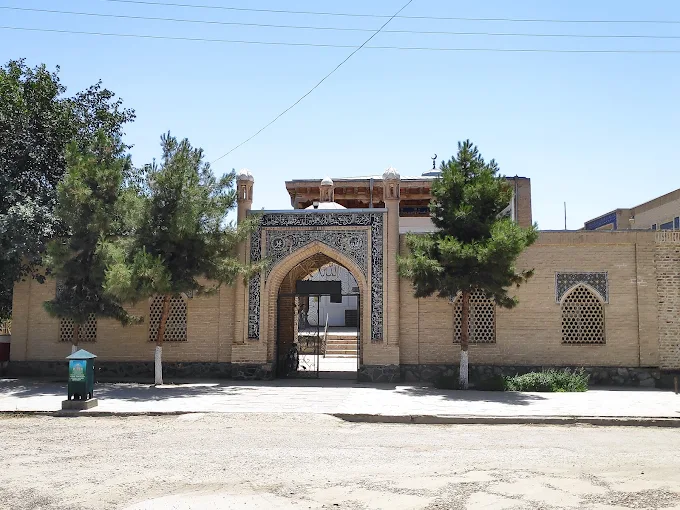
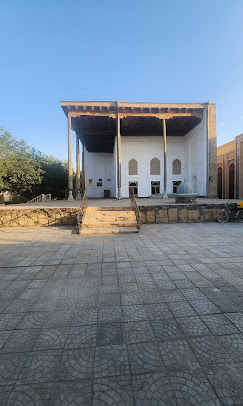
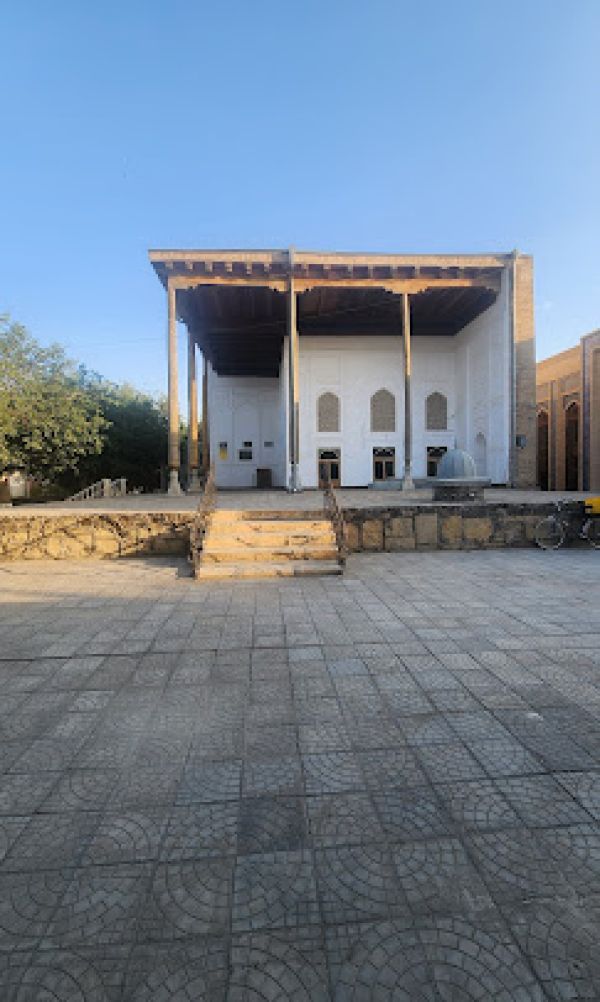
But especially during the period of Abdullahan II, Bukhara became a phenomenon in the art of architects, forming its own architectural school. The Mir-i Arab madrasah and the Kalyan Mosque were built in the city, the formation of the Poi Kalyan central complex was completed, the stunning Khoja Zain al-Din and Baland mosques were built, and the construction of the Bahauddin Naqshbandi complex began. To the south of the Kosh Madrasah, in a modern complex, there is a small mosque Balyand ("High"). It is named "Balyand" because it has a raised slope, and on a wooden pillar there is a winter room of the Ivan mosque.
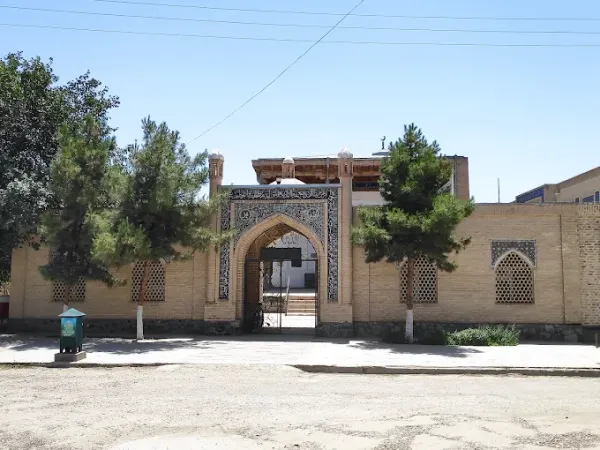
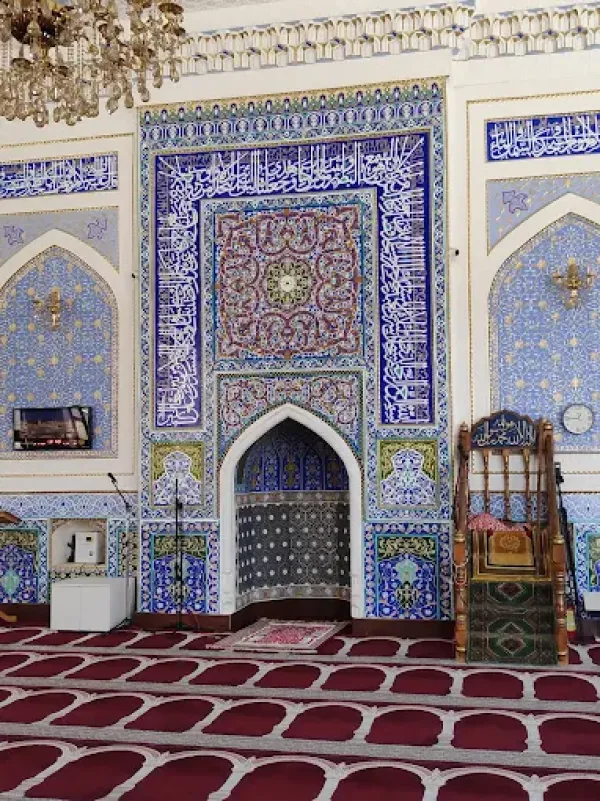
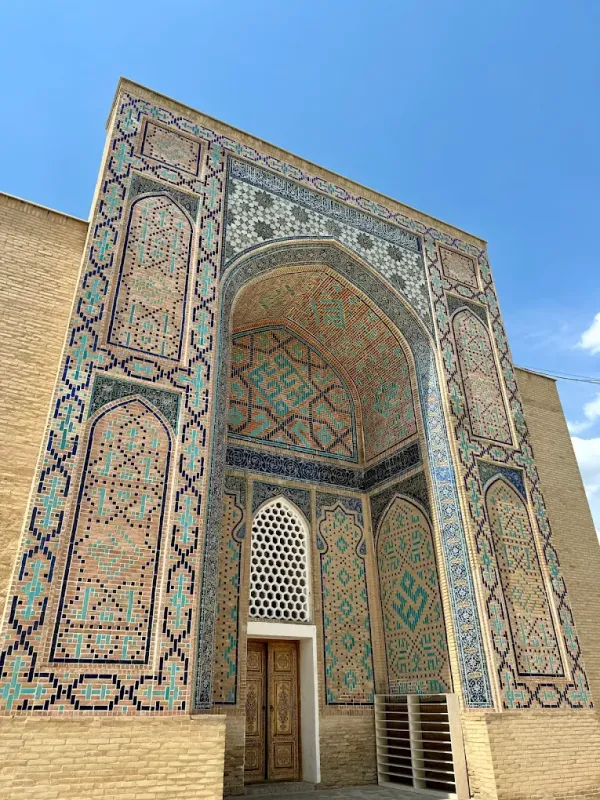
The appearance of these columns is relatively late, around the 19th century, and, apparently, they were erected to replace the dilapidated old ones. The Balyand Mosque, built in the early 16th century, is the only ancient example of a Guzar mosque or community mosque, built apparently with donations from a wealthy community. Externally, this monument does not differ much from the deceased Guzar mosques common in Bukhara. The entire architectural effect of the building is currently hidden inside. The interior is beautifully decorated in contrast to the simplicity of the exterior.
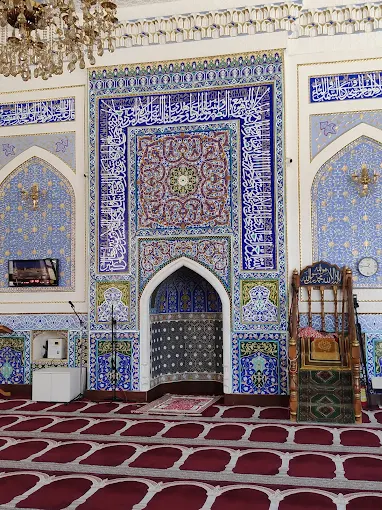
At the base of the wall is a high bright green glazed latticed tile with a subtle gold painting. The walls are framed by rectangular panels, in which decorative wall arches are carved, completely covered with paintings of the kunda technique, rich in gold and in various color combinations. This lush floral decorative painting is very reminiscent of a "floral" carpet. As in any mosque, there are religious inscriptions in sult's handwriting. The Mihrab niche is a perfect example of inlaid, engraved mosaics with clean, vibrant colors and intricate patterns. Everything in this mosque looks like 15th century construction machinery. It was rebuilt at the beginning of the 16th century, when the decorative techniques of Timurid buildings still existed and skills were not lost, and the cheapness of building materials and technologies did not reduce the nobility of decorative craftsmanship.
The building retains its striking architectural form: a grand suspended wooden ceiling with a deep coffered system and a central mirror. The colorful splendor of the mosque is concentrated in the decoration of its interior walls and ceilings. The entire ceiling is covered with geometric patterns forming a 12-pointed star in the center. The ceilings are made with beautiful carpentry sets and carvings. The suspended ceiling hides the real structure of the ceiling of this hall: cut corners passing from a square to an octagon and to a dome.
Architectural and decorative painting in interiors is carried out only with mineral paints, especially on solutions of eggs and glue. Dyes used: natural ultramarine blue, which appears blue, copper-copper such as malachite or chrysoberyl - green, ochre mixed with cinnabar - red, ochre — yellow, charred bones — black. Dilute the coating with a liquid solution of apricot or cherry gum and add the egg yolks. The painting has a velvety texture. The branches of the plant are represented by relatively thin elastic stripes, and the leaves are usually scattered. Flowers and buds come in a wide variety of shapes. A lot of tradition and stylization is allowed.
Sometimes all the main elements of the interior are painted. Wall decoration is usually done without painting the background (if not the kundara). Here, the fresco scheme is dominated by cold tones. But the richest murals adorn the cornice and the wooden joints of the entire ceiling, in which the background painting is very important. The color scheme in the upper part of the room consists of background colors - blue, light blue, green and red. The color is of medium intensity, not bright. The Guzar Mosque is inseparable from the daily life of mahali. With its exquisite interiors, the Balyand Mosque evokes a sense of peace, a subtle contemplative mood that escapes the hustle and bustle of the surrounding world.
The predominance of the plane here is offset by the classical proportions of the parts of the field: one panel, above which large and small panels are used, then a frieze. In the Balyand Mosque, the picturesque decorative elements on the walls are designed to be extraordinarily dazzling. And it is not surprising that in later buildings, architects used the interior of the mosque many times as a model worthy of imitation. Currently, the mosque is more than 500 years old. It belongs to the UNESCO World Heritage Site.




Place on the map
Tours where you can visit this place:
Balyand Mosque
Tashkent — Bukhara — Samarkand — Shakhrisabz
- 720$
- 7d.

Balyand Mosque
Tashkent — Bukhara — Samarkand
- 640$
- 7d.

Balyand Mosque
Tashkent — Bukhara — Samarkand — Khiva — Khorezm
- 730$
- 7d.
Balyand Mosque
Tashkent — Bukhara — Samarkand
- 500$
- 5d.

Balyand Mosque
Bukhara — Samarkand — Shakhrisabz
- 480$
- 5d.

Balyand Mosque
Bukhara — Samarkand — Khiva
- 440$
- 5d.
Balyand Mosque
Tashkent — Bukhara — Samarkand — Khiva
- 590$
- 6d.
Balyand Mosque
Tashkent — Bukhara — Samarkand — Shakhrisabz
- 1150$
- 7d.
