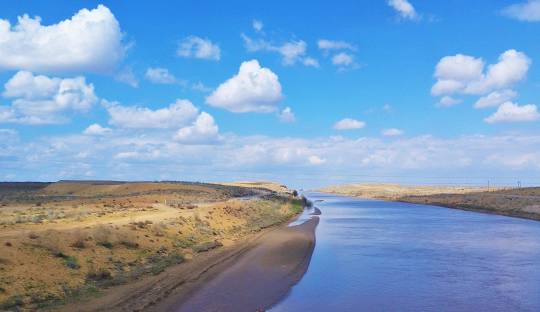


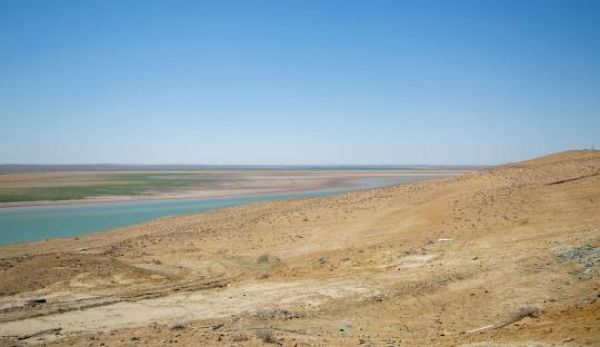
The Amu Darya River
The Amu Darya is a majestic and one of the largest rivers in Central Asia, which plays a huge role in the history, culture and life of the peoples of the region. Its length is about 2,540 kilometers, and the basin covers the territories of Uzbekistan, Tajikistan, Turkmenistan and Afghanistan.
The river is formed in the Pamir Mountains, where two mountain rivers, the Panj and the Vakhsh, merge. From there, the Amu Darya flows northwest through deserts and oases, feeding the lands where ancient civilizations flourished for centuries - Bactria, Khorezm and Sogdiana.
The banks of the Amu Darya are covered with dense tugai thickets, and the river's waters serve as a source of life for huge agricultural areas. Thanks to it, fields of cotton, rice and wheat are cultivated, and numerous canals originating from the Amu Darya create entire oases in the arid steppes.
Since ancient times, the river has been considered a sacred artery of the East — it was mentioned in the writings of ancient historians and praised in Persian and Turkic poetry. The Amu Darya not only connected, but also divided the states, served as a natural border and trade route between East and West.
Today, the Amu Darya continues to be a vital waterway of Central Asia, reminding us that even in the heart of the desert there can be a river that gives life to thousands of people and cultures.

Place on the map
Tours where you can visit this place:
The Amu Darya River
Tashkent — Bukhara — Samarkand — Shakhrisabz
- 720$
- 7d.

The Amu Darya River
Tashkent — Bukhara — Samarkand
- 640$
- 7d.

The Amu Darya River
Tashkent — Bukhara — Samarkand — Khiva — Khorezm
- 730$
- 7d.
The Amu Darya River
Tashkent — Bukhara — Samarkand
- 500$
- 5d.

The Amu Darya River
Bukhara — Samarkand — Shakhrisabz
- 480$
- 5d.

The Amu Darya River
Bukhara — Samarkand — Khiva
- 440$
- 5d.
The Amu Darya River
Tashkent — Bukhara — Samarkand — Khiva
- 590$
- 6d.
The Amu Darya River
Tashkent — Bukhara — Samarkand — Shakhrisabz
- 1150$
- 7d.
