Necropolis of Chor-Bakr
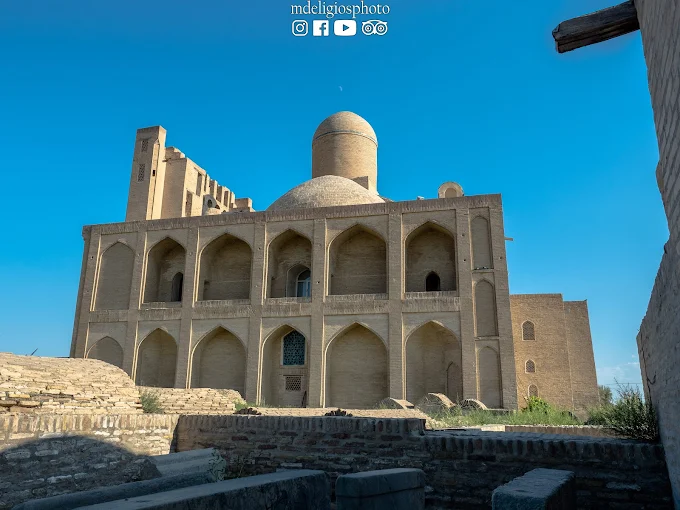
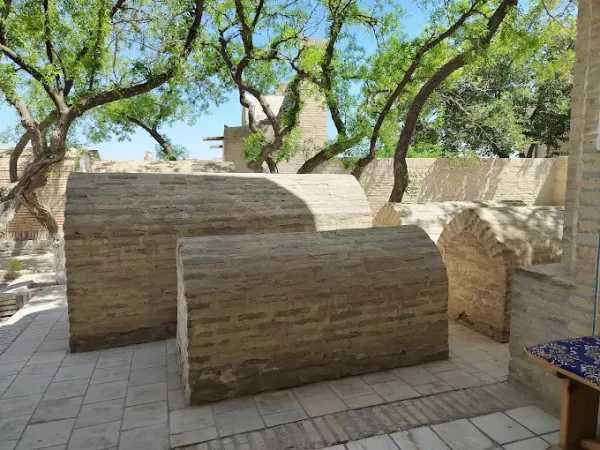
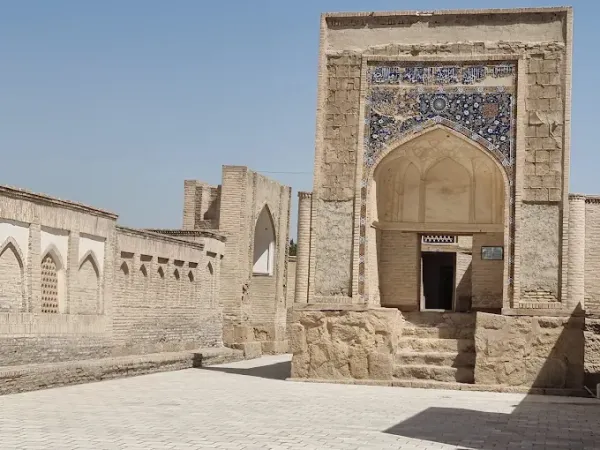
5 kilometers west of Bukhara, where the fields are divided by rows of mulberry trees, one of the unusual sights is hidden – the necropolis of Chor-Bakr, which is also called the City of the Dead. The first burials appeared here a thousand years ago, when there was a small settlement of dervishes nearby. But the magnificent architectural ensemble, which is now visited by thousands of pilgrims and tourists, was built only in the XVI century.
In the 10th century, when Bukhara was ruled by the Samanid dynasty, there was a family of the Juybar Seyids (descendants of the Prophet Muhammad), who occupied an important place in the life of the city. For centuries, the Juybars were buried in this rural cemetery.
In 1560, the ruler of the Sheibanid dynasty, Abdullahan II, decided to perpetuate the memory of the noble family by ordering the construction of a mosque, madrasah and khanaka here. It was a gift to his teacher, the Juybara Sheikh Khoja Muhammad Islam, who died in 1563. The construction of the complex was completed at the same time.
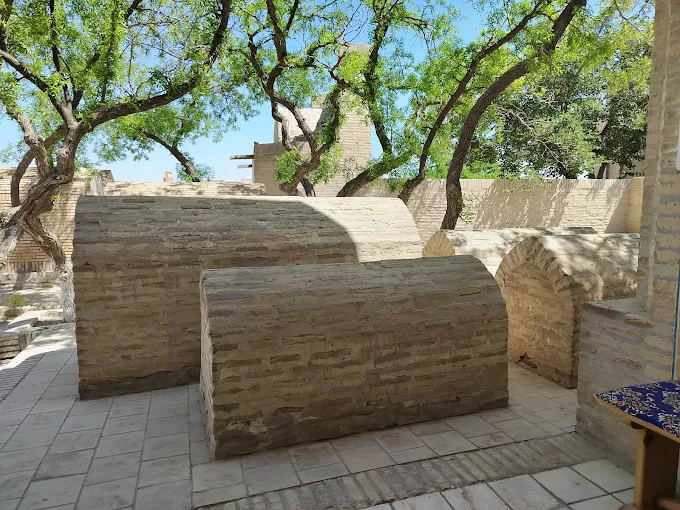
In 1593, Khoja Bakr Sa 'd, the son of Muhammad Islam, who was buried next to his father, died. Later, other representatives of this family, Abu Bakr Fazl and Tojiddin Hassan, were buried here. These four people, who bore the title of "Bakr", rest in the same khazira (tomb). The word "bakr" translates as "brother," and the name of the Chor-Bakr complex means "Four Brothers."
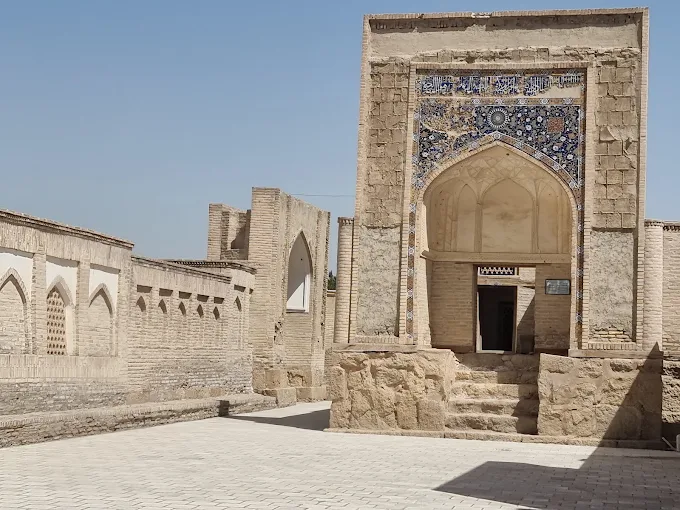
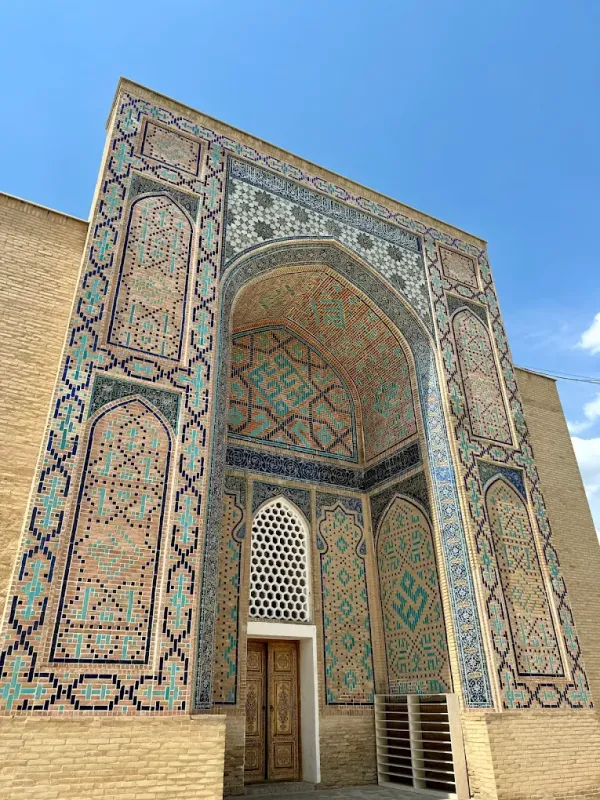
A khazira is a form of funerary structure that consists of a courtyard surrounded by powerful walls, with one entrance representing a beautifully decorated gate. It is the design of the tomb that distinguishes the Chor-Bakr necropolis from other religious graves in Uzbekistan, for example, from the Shahi-Zinda necropolis. This is how the entire complex is built.
The Khazira of the Juybar Sayyids is located in the northwestern part of the complex and the way to it goes through a long corridor in which every step is reflected from the brick walls with a ringing echo. Other hazaras are located in the eastern part of the complex and stretch in a long line from north to south, and opposite them, behind a small pond, rise the buildings of the mosque and khanaka. It is noteworthy that over time, the burial rules became less strict and Chor-Bakr became just the family tomb of the Juybars: all members of the dynasty, including women, were buried here.
At the beginning of the 20th century, a small minaret was added to the complex of buildings, which resembles the famous Bukhara Kalyan, and thus 30 architectural structures have already been located on the territory of Chor-Bakr. In addition, to the north of the necropolis there is a large garden, laid out in the XVI century. Poplars, plane trees, willows and various fruit trees grow here.
Chor-Bakr is really an unusual, mysterious place. When visiting Chor-Bakr, it is impossible not to feel the breath of the world of the dead, where in the silence of the alleys thoughts about the frailty of existence and the transience of human life involuntarily visit.




Place on the map
Tours where you can visit this place:
Necropolis of Chor-Bakr
Tashkent — Bukhara — Samarkand — Shakhrisabz
- 720$
- 7d.

Necropolis of Chor-Bakr
Tashkent — Bukhara — Samarkand
- 640$
- 7d.

Necropolis of Chor-Bakr
Tashkent — Bukhara — Samarkand — Khiva — Khorezm
- 730$
- 7d.
Necropolis of Chor-Bakr
Tashkent — Bukhara — Samarkand
- 500$
- 5d.

Necropolis of Chor-Bakr
Bukhara — Samarkand — Shakhrisabz
- 480$
- 5d.

Necropolis of Chor-Bakr
Bukhara — Samarkand — Khiva
- 440$
- 5d.
Necropolis of Chor-Bakr
Tashkent — Bukhara — Samarkand — Khiva
- 590$
- 6d.
Necropolis of Chor-Bakr
Tashkent — Bukhara — Samarkand — Shakhrisabz
- 1150$
- 7d.
